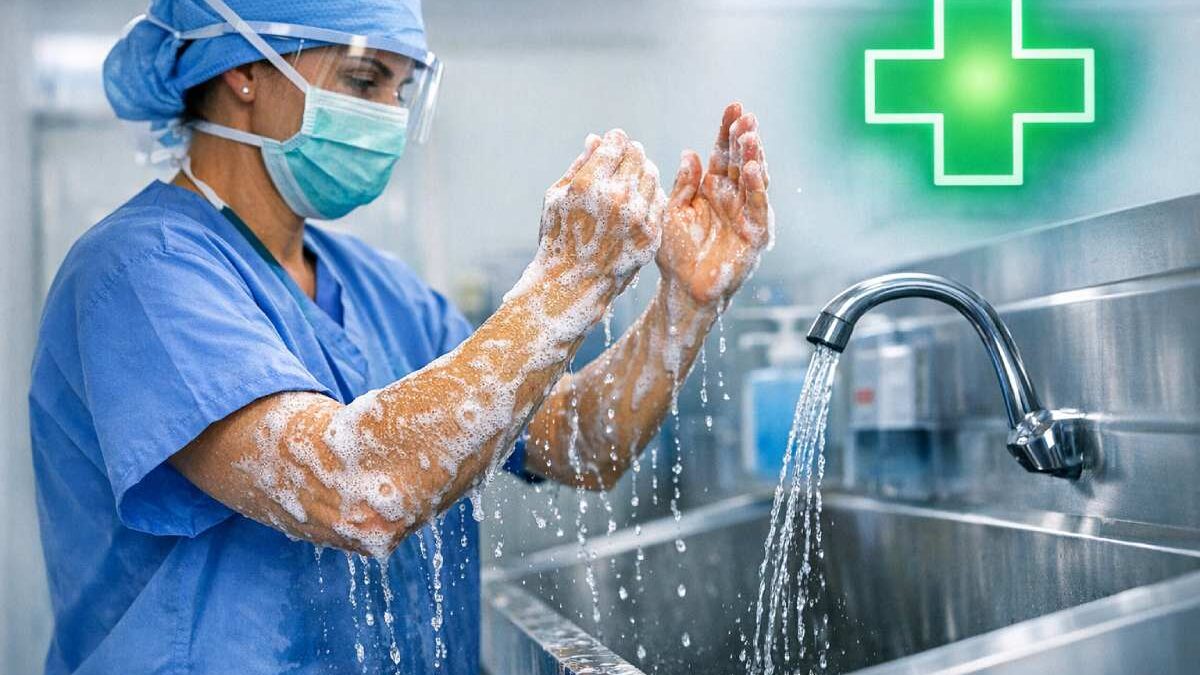
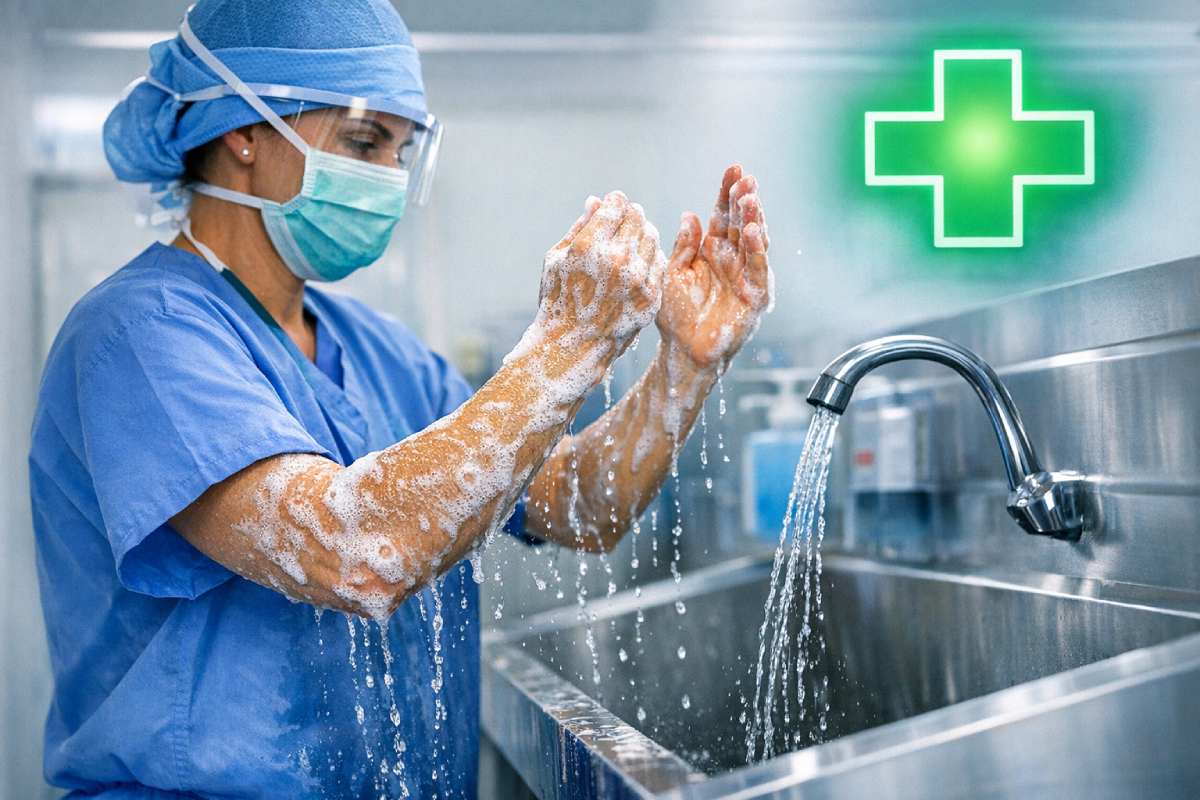
Infection prevention of the operating room is based on surgical hand washing. This ultimate hand washing guide provides the 7 Steps of Surgical Hand Washing, evidence based practices and professional methods in a bid to attain optimal hand antisepsis prior to surgical practices.
Table of Contents
What Is Surgical Hand Washing?
Definition and Purpose
Surgical hand washing can also be referred to as surgical hand scrub or surgical hand antisepsis, and is a procedure that is performed in a systematic manner and has the aim of eliminating temporary microorganisms as well as reducing the number of resident bacteria that can be found on the hands and forearms of surgical staff. It is a crucial precautionary step of infection control and protection of patients against surgical site infections (SSIs) and maintenance of the sterile field of the procedure.
As opposed to normal handwashing, surgical hand antisepsis offers superior microbial abatement and offers continued antimicrobial efficacy that works long-lastingly even within surgical gloves.
Difference Between Surgical Scrub and Regular Handwashing
Frequent washing of hands does away with dirt and temporary microorganisms through mechanical friction with soap and water, usually in 20-30 seconds.
Surgical hand scrub requires:
- Longer duration (2-5 minutes depending on protocol)
- Antimicrobial agents (chlorhexidine, povidone-iodine, or alcohol-based formulations)
- Extended coverage (hands and forearms up to elbows)
- Systematic technique following specific anatomical patterns
- Sterile maintenance after completion until gloves are donned
Why Surgical Hand Antisepsis Matters
Surgical site infection is one of the most prevalent healthcare associated infections that develop in 2-5 percent of all patients undergoing surgery. Proper surgical hand hygiene reduces the population of bacteria on the skin by 99.9 and significantly reduces the risk of SSI.
Research shows that despite the use of gloves, micro-perforations are experienced in 15-30% of surgical operations, and this increases in the case of long-term procedures. The continuing antimicrobial effect of adequate hand washing during surgery is essential in times when the integrity of gloves is lost.
Pre-Scrub Requirements and Preparation
Before beginning the 7-step surgical hand washing protocol, complete these essential preparation steps:
Remove All Jewelry and Accessories
Take off watches, bracelets and rings and enter the scrub area. Jewelry contains crevices which are attended to by microorganisms which can not be removed by scrubbing creating barriers to contact with antimicrobial agents by skin surfaces.
Inspect Hands and Nails
Check for:
- Open cuts, abrasions, or skin breaks (report to supervisor; may require exclusion from sterile field)
- Nail length (trim to ≤0.5 cm beyond fingertip)
- Artificial nails or extenders (prohibited in surgical settings)
- Nail polish (chipped polish harbors bacteria; fresh polish may be acceptable per facility policy)
Don Appropriate Surgical Attire
Ensure proper attire before scrubbing:
- Surgical scrubs properly fitted
- Hair completely covered with surgical cap
- Mask covering nose and mouth
- Protective eyewear if required
Adjust Water Temperature and Flow
Turn on water with foot or knee (or have circulating nurse) controls. Adapt to the temperature of lukewarm, the extreme hot water damages the skin whereas cold water is not effective in removing the oils and debris.
The 7 Steps of Surgical Hand Washing (Detailed Protocol)
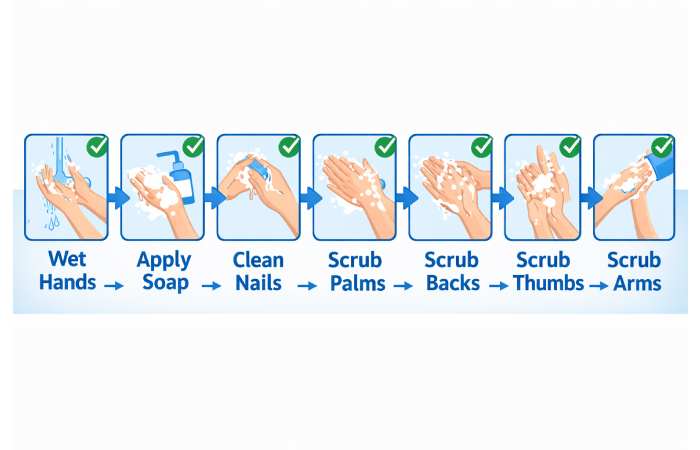
Below, the protocol is the best evidence-based practice regarding surgical hand antisepsis, and it consists of all three recommendations by the CDC, WHO, and Association of periOperative Registered Nurses (AORN).
Step 1: Wet Hands and Forearms
Technique:
- Hold hands higher than elbows throughout the scrub (water flows from cleanest area to least clean)
- Wet hands first, then forearms, allowing water to drip from elbows into the sink
- Keep hands in the “prayer position” or with fingers pointing upward
Duration: 30 seconds
Why it matters: Wetting prepares skin for antimicrobial agent application and begins the mechanical removal of transient flora.
Step 2: Apply Antimicrobial Soap
Technique:
- Dispense antimicrobial soap into cupped palm (approximately 3-5 mL for liquid formulations)
- If using impregnated brush/sponge, wet thoroughly to activate antimicrobial agent
- Work soap into a rich lather covering all hand and forearm surfaces
Duration: 20 seconds
Key point: Ensure complete coverage—antimicrobial agents only work where applied.
Step 3: Clean Under Fingernails
Technique:
- Use disposable nail cleaner under running water
- Clean beneath the free edge of each nail for 10-15 strokes per nail
- Discard nail cleaner after single use (do not reuse between hands)
- Pay special attention to subungual areas—these harbor the highest bacterial concentrations
Duration: 1 minute (approximately 6 seconds per nail)
Critical importance: The subungual region (under nails) contains up to 10⁴-10⁵ colony-forming units, making thorough nail cleaning essential.
Step 4: Scrub Fingers and Hands (Palm to Palm)
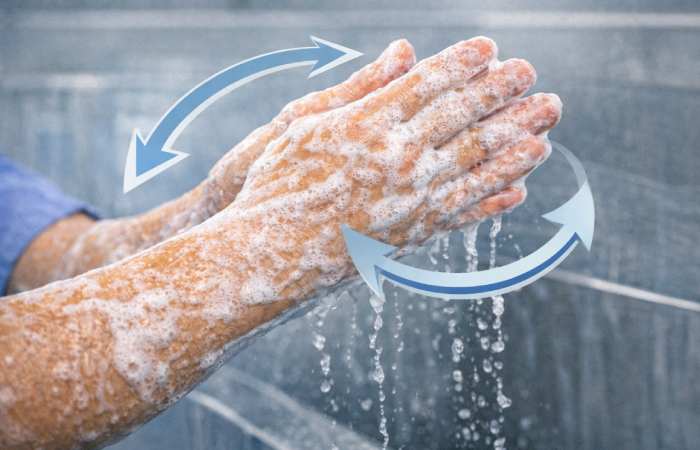
Technique:
- Palm to palm friction with fingers interlaced
- Scrub all surfaces of each finger using systematic approach:
-
- Each finger individually (all four sides)
- Finger webs (spaces between fingers)
- Fingertips
- Visualize each finger as having four surfaces requiring individual attention
Duration: 2 minutes for both hands
Systematic approach:
- Start with thumb, progress to little finger
- Use circular motions or back-and-forth strokes
- Maintain consistent pressure throughout
Step 5: Scrub Between Fingers and Backs of Hands
Technique:
- Right palm over left dorsum (back of hand) with fingers interlaced—scrub with back-and-forth motion
- Left palm over right dorsum with fingers interlaced—repeat motion
- Ensure finger webs receive thorough scrubbing from both palmar and dorsal approaches
- Scrub the backs of fingers using opposing palm
Duration: 1 minute
Commonly missed areas: Finger webs and the dorsal (back) surface of the thumb often receive inadequate attention.
Step 6: Scrub Thumbs and Wrists
Technique:
- Thumb scrubbing: Grasp left thumb with right palm and fingers; rotate thumb while scrubbing all surfaces; repeat with right thumb
- Wrist scrubbing: Use circular motions around the entire circumference of each wrist
- Ensure complete coverage of the anatomical snuffbox (depression on thumb side of wrist)
Duration: 30 seconds per hand
Why thumbs matter: Thumbs are the most frequently used digits in surgery and require dedicated attention.
Step 7: Scrub Forearms and Final Rinse
Technique:
- Divide each forearm into thirds (lower, middle, upper)
- Scrub each third using circumferential motions
- Progress from wrist toward elbow
- Scrub all surfaces (front, back, sides) of each third
- Final rinse: Rinse hands first, then forearms, allowing water to drip from elbows
- Keep hands elevated above elbows throughout rinse
Duration: 1 minute per forearm; 30 seconds rinse
Critical rule: Never return to previously scrubbed areas after moving toward the elbow.
How Long Should Surgical Hand Washing Take?
Recommended Duration Guidelines
Current evidence-based recommendations vary by method and antimicrobial agent:
CDC Guidelines:
- Initial scrub: 2-5 minutes depending on product
- Subsequent scrubs: 2-3 minutes (same day)
WHO Guidelines:
- Antiseptic soap scrub: 3-5 minutes
- Alcohol-based hand rub: Follow manufacturer’s instructions (typically 1.5-3 minutes)
Timed Method vs. Counted Stroke Method
Timed Method:
- Monitor total elapsed time
- Typically 3-5 minutes for initial scrub
- Simple to teach and monitor
- Risk: Rushing through areas to meet time requirement
Counted Stroke Method (Anatomical Method):
- Predetermined number of strokes for each anatomical area
- Example: 10 strokes per finger surface, 10 strokes per forearm section
- Ensures systematic coverage
- More complex but ensures attention to all areas
Current best practice: Many institutions combine both—use anatomical approach to ensure coverage while maintaining minimum time requirement.
First Scrub vs. Subsequent Scrubs
First scrub of the day:
- Longer duration (3-5 minutes)
- More thorough nail cleaning
- Establishes baseline bacterial reduction
Subsequent scrubs (same day):
- Shorter duration acceptable (2-3 minutes)
- Resident flora already reduced
- Nail cleaning still required but may be briefer
Types of Antimicrobial Agents Used
Chlorhexidine Gluconate (CHG)
Concentration: 2-4%
Advantages:
- Persistent activity lasting 6+ hours
- Broad-spectrum antimicrobial coverage
- Binds to stratum corneum for sustained effect
- Cumulative effect with repeated use
Considerations:
- Avoid contact with eyes and ears (ototoxicity risk)
- Inactivated by organic matter less than iodophors
Scrub time: 3 minutes per manufacturer guidelines
Povidone-Iodine (PVPI)
Concentration: 7.5-10%
Advantages:
- Broad-spectrum including spores
- Rapid antimicrobial action
- Visible tint confirms coverage
Considerations:
- Less persistent activity than CHG
- May cause skin dryness/irritation
- Not suitable for iodine-allergic individuals
- Staining of skin and clothing
Scrub time: 5 minutes per traditional protocols
Alcohol-Based Surgical Hand Rubs
Concentration: 60-95% alcohol with emollients
Advantages:
- Rapid bacterial reduction
- No water required
- Convenient
- Less skin damage than repeated soap scrubbing
Considerations:
- Hands must be physically clean first
- Flammability concerns
- Requires adequate volume and friction time
Application time: 1.5-3 minutes per manufacturer instructions
Which Agent Is Best?
Research shows: CHG and alcohol-based hand rubs demonstrate superior persistent activity compared to iodophors. Both achieve comparable bacterial reduction to traditional PVPI scrubs in significantly less time.
Institutional choice depends on:
- Procedure type and duration
- Staff skin tolerance
- Cost considerations
- Product availability
- Facility protocols
Brush vs. Brushless Surgical Scrub Techniques
Traditional Brush Method
Historically, stiff-bristled brushes were standard for surgical scrubbing.
Current CDC position: “Neither a brush nor a sponge is necessary to reduce bacterial counts on the hands.”
Concerns with brushes:
- Cause micro-abrasions and skin damage
- Increase bacterial shedding from damaged skin
- Lead to hand dermatitis with repeated use
- May actually increase bacterial counts over time
Brushless Hand Scrub Technique
Modern protocols emphasize friction over abrasion.
Technique:
- Use hands to create friction against each other
- Soft sponges acceptable for nail cleaning only
- Focus on systematic coverage rather than aggressive scrubbing
Benefits:
- Reduced skin damage
- Better compliance
- Equal or superior bacterial reduction
- Improved hand health
CDC Recommendations on Brush Use
Current CDC guidelines recommend:
- Brushless technique preferred for hand and forearm scrubbing
- Disposable nail cleaner for subungual areas
- Soft sponges acceptable if brushes are used, limited to gentle application
- Avoid stiff bristle brushes on skin surfaces
Maintaining Sterility After Scrubbing
Surgical hand washing is only effective if sterility is maintained until gloves are donned.
Proper Hand Position After Scrub
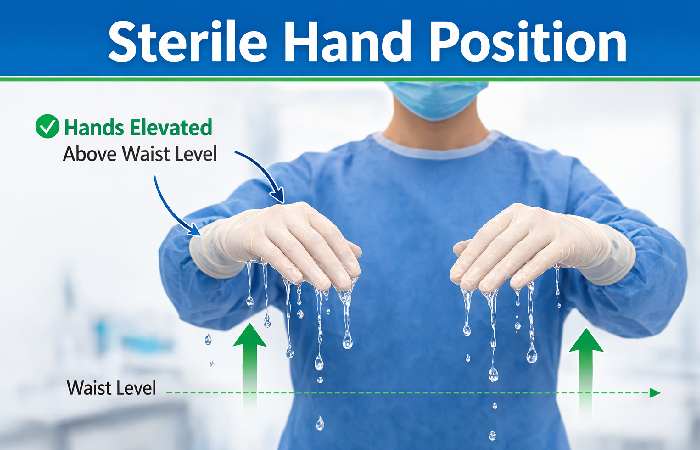
Critical rules:
- Hold hands above waist level at all times
- Keep hands higher than elbows
- Do not touch any non-sterile surface
- Keep hands in front of body, away from scrub attire
- Move backward through doors using body, not hands
If contamination occurs: Repeat entire scrub procedure
Drying Technique
Proper method:
- Grasp sterile towel from sterile field without contaminating other items
- Dry one hand thoroughly using one end of towel
- Dry forearm using blotting motion, progressing from hand toward elbow
- Use opposite end of towel for other hand/forearm
- Discard towel without lowering hands
Never: Use the same towel section for hands and forearms, or return to previously dried areas. (CDC)
Aseptic Gowning and Gloving
After drying, immediately proceed to gowning and gloving while maintaining hand sterility:
- Gown using aseptic technique (hands inside gown, circulating nurse ties)
- Glove using closed or open technique per facility protocol
- Inspect gloves for integrity
Common Mistakes in Surgical Hand Washing
Inadequate Nail Cleaning
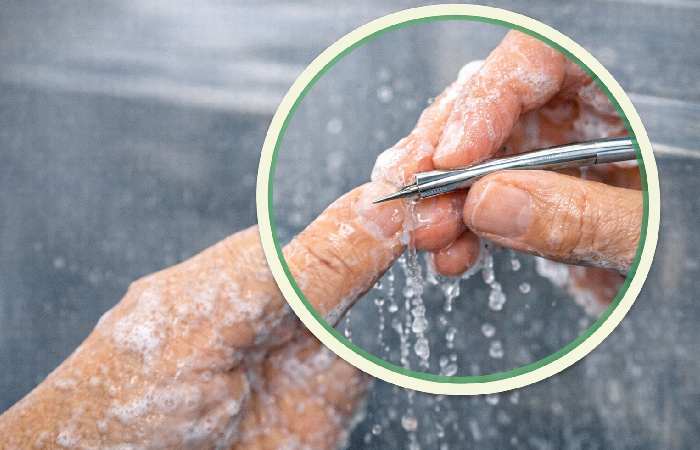
The problem: Rushing through or skipping nail cleaning allows high bacterial loads to persist.
The solution: Dedicate full minute to thorough subungual cleaning with disposable nail cleaner.
Rushed Scrubbing Time
The problem: Failing to meet minimum duration requirements reduces antimicrobial efficacy.
The solution: Use timer or counted stroke method to ensure adequate contact time.
Missing Critical Hand Areas
Commonly missed areas:
- Fingertips
- Thumb webs
- Wrist circumference
- Ulnar (little finger) side of hands and forearms
The solution: Use systematic anatomical approach, visualizing each area requiring attention.
Contamination During Rinse
The problem: Allowing water to run from elbows back to hands contaminates clean areas.
The solution: Always keep hands higher than elbows; allow water to drip from elbows into sink.
Improper Hand Position After Scrub
The problem: Touching scrub attire, lowering hands, or touching non-sterile surfaces.
The solution: Maintain hands-up position, use body to open doors, proceed immediately to sterile field.
When Should Surgical Hand Washing Be Performed?
Before All Surgical Procedures
Surgical hand antisepsis is mandatory before:
- Any invasive surgical procedure
- Placement of central venous catheters
- Other procedures requiring sterile field maintenance
Re-Scrub Scenarios
Full re-scrub required if:
- Hands touch any non-sterile surface
- Gloves become contaminated before procedure begins
- Breaking scrub during long procedures (controversial; follow facility protocol)
- Glove puncture with suspected skin contact
Debate exists regarding need for full re-scrub during extended procedures vs. glove changes only.
Special Considerations
Multiple procedures same day: Subsequent scrubs may be shorter duration if performed within several hours of initial scrub.
Water quality concerns: In settings where water quality cannot be assured, alcohol-based surgical hand rubs are recommended over water-based scrubbing. (WHO)
Evidence-Based Benefits of Proper Surgical Hand Hygiene
Reduction in Surgical Site Infections
Proper surgical hand antisepsis achieves:
- 2-3 log reduction (99-99.9% decrease) in bacterial counts
- Persistent antimicrobial effect under gloves for 6+ hours with CHG
- Significant reduction in SSI rates when combined with other sterile techniques
Patient Safety Outcomes
Studies demonstrate that comprehensive hand hygiene protocols, including proper surgical hand washing, correlate with:
- Decreased healthcare-associated infection rates
- Shorter hospital stays
- Reduced antibiotic usage
- Lower healthcare costs
- Improved surgical outcomes
Healthcare Worker Protection
Surgical hand antisepsis also protects surgical team members from:
- Bloodborne pathogen exposure through micro-abrasions
- Colonization with resistant organisms
- Cross-contamination between patients
FAQs – Frequently Asked Questions
Q1: How long should the 7 steps of surgical hand washing take in total?
The complete surgical hand washing protocol typically takes 3-5 minutes for the initial scrub of the day. Subsequent scrubs on the same day may be shorter (2-3 minutes). The exact duration depends on the antimicrobial agent used—chlorhexidine typically requires 3 minutes, while povidone-iodine traditionally requires 5 minutes.
Q2: Can I use regular soap for surgical hand washing?
No. Surgical hand antisepsis requires antimicrobial soap containing agents like chlorhexidine gluconate (CHG), povidone-iodine (PVPI), or alcohol-based formulations. Regular soap lacks the persistent antimicrobial activity necessary to maintain bacterial reduction under surgical gloves during procedures.
Q3: Do I need to use a brush for surgical hand scrubbing?
No. Current CDC guidelines state that brushes are not necessary for effective surgical hand antisepsis. In fact, stiff-bristled brushes can cause skin damage and increase bacterial shedding. Modern protocols emphasize friction using hands, with disposable nail cleaners for subungual areas. Soft sponges are acceptable if gentle pressure is used.
Q4: What’s the difference between the timed method and counted stroke method?
The timed method focuses on scrubbing for a specified duration (usually 3-5 minutes total), while the counted stroke method assigns a predetermined number of strokes to each anatomical area (e.g., 10 strokes per finger surface). Many facilities use a hybrid approach—following an anatomical pattern while maintaining minimum time requirements—to ensure both systematic coverage and adequate antimicrobial contact time.
Q5: Why must hands be kept above elbows during surgical hand washing?
Holding hands higher than elbows prevents water from flowing from the “dirty” forearm area back to the “clean” hands. This maintains the principle that water should always flow from the cleanest area (hands) to the least clean area (elbows), carrying bacteria away rather than redistributing it to scrubbed surfaces.
Q6: What should I do if I accidentally touch something non-sterile after scrubbing?
If you contaminate your hands or forearms by touching any non-sterile surface after completing the surgical scrub, you must repeat the entire scrub procedure. There are no shortcuts—maintaining absolute sterility is essential for infection prevention. Inform your team and restart the scrub protocol.
Q7: Are artificial nails allowed during surgical procedures?
No. Artificial nails, nail extenders, and chipped nail polish are prohibited in surgical settings. These harbor microorganisms that cannot be removed through scrubbing and significantly increase bacterial counts. Natural nails should be kept short (≤0.5 cm beyond the fingertip) and clean.
Q8: How is surgical hand washing different from alcohol-based hand rub used in other healthcare settings?
While alcohol-based hand sanitizers are appropriate for routine healthcare hand hygiene, surgical hand antisepsis requires either antimicrobial soap scrubbing or specially formulated alcohol-based surgical hand rubs. Surgical formulations provide persistent antimicrobial activity lasting hours, unlike regular sanitizers designed for immediate action only. Surgical hand rubs must be applied using specific technique for 1.5-3 minutes to achieve equivalent efficacy.