
The Evolution of Walkie-Talkie Technology
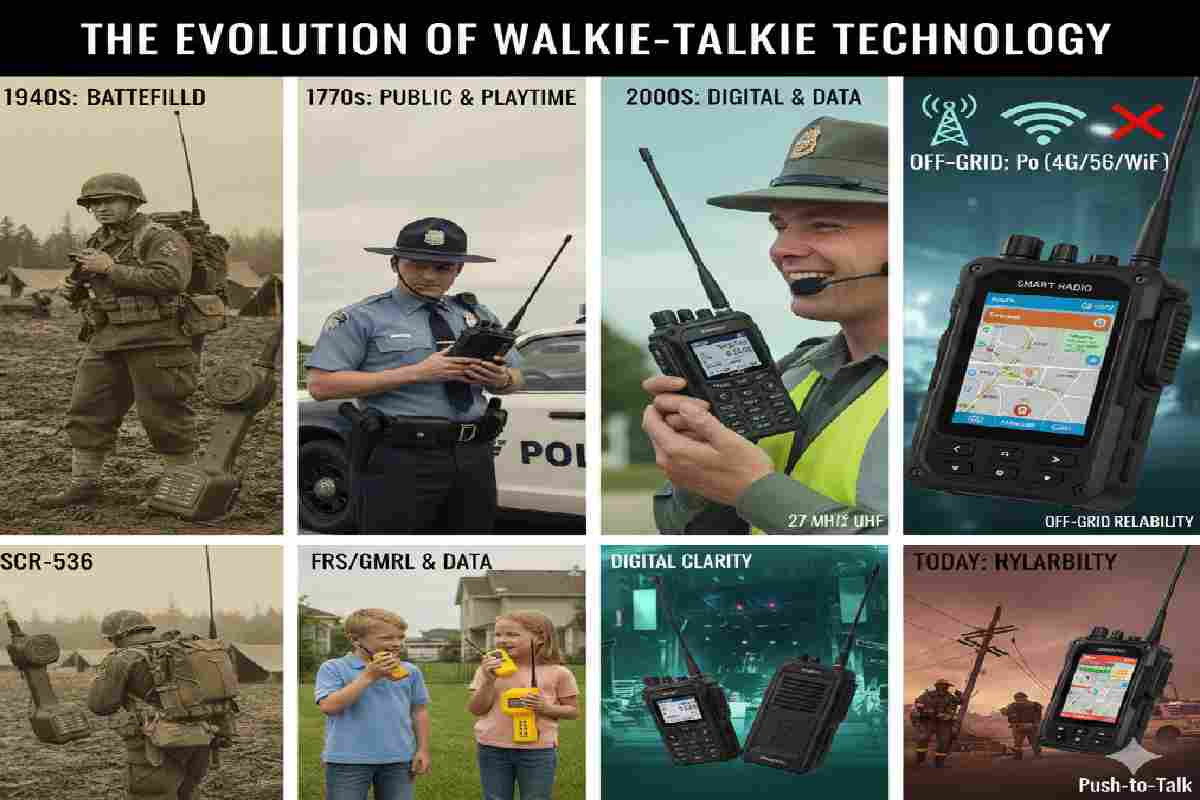
The humble walkie-talkie was once the gear of choice for battlefield coordination and backwoods adventure. Now? It’s a sleek, software-powered device capable of nationwide communication. If that sounds like a leap, it is. And it’s a story that mirrors the broader tech evolution from clunky analog to intelligent digital.
Let’s rewind.
Table of Contents
Static, Beeps, and Push-to-Talk: The Analog Era
The classic analog walkie-talkie—bulky, limited in range, and prone to interference—relied on VHF/UHF radio frequencies to transmit voice signals. These units were built for line-of-sight communication and had a ceiling of a few miles, depending on terrain.
Despite limitations, analog walkie-talkies became iconic. Police, construction crews, and outdoor enthusiasts leaned on their simplicity. Press a button, speak, release. No menus. No networks. Just signal and static.
But analog systems were vulnerable. Frequency congestion, signal bleed, and lack of encryption made them noisy—and not just audibly. It was difficult to manage large teams or protect sensitive conversations. That’s where digital swept in.
Enter Digital: The Clarity and Control Revolution
Digital walkie-talkies marked the turning point. Suddenly, voice signals were converted to data packets, reducing interference and improving sound quality. Clarity jumped. So did control.
With digital tech came encryption, user IDs, and text messaging. Fleet managers could monitor usage, prioritize messages, and reroute communication across teams. The devices also consumed less power, extending battery life—critical for field teams and emergency services.
More importantly, digital systems could operate on existing IP networks. That paved the way for the next leap: Push-to-Talk over Cellular (PoC).
Nationwide Push-to-Talk: Breaking Geographic Limits
Modern walkie-talkies have outgrown radio towers. Push-to-Talk over Cellular uses 4G LTE and Wi-Fi networks to connect devices across the country in real time. You no longer need to worry about terrain, repeaters, or FCC licensing zones.
This advancement isn’t just technical. It’s operational. Delivery companies can coordinate cross-state logistics. Event teams can sync up from coast to coast. And unlike smartphones, PoC devices are rugged, built for one-touch group comms, and immune to app fatigue.
Think of it this way: it’s the utility of old-school walkie-talkies, upgraded with the infrastructure of the modern mobile web.
Who’s Using the New Tech?
Industries adopting digital walkie-talkies today include:
- Transportation & Logistics – Dispatchers maintain real-time contact with fleets across state lines.
- Hospitality – Hotels and resorts use them for staff coordination without relying on noisy open channels.
- Security & Public Safety – Encrypted, GPS-enabled devices help teams respond quickly and privately.
- Construction – Workers coordinate across sprawling sites without gaps in coverage.
In many cases, digital walkie-talkies are replacing or supplementing traditional two-way radios—especially in environments where speed, reliability, and clarity are non-negotiable.
Why It Matters Now
The shift from analog to digital isn’t just about convenience—it’s about modernization. Today’s digital walkie-talkie platforms merge voice, data, GPS, and connectivity, transforming a legacy tool into a smart device. As communication becomes a strategic advantage, real-time, clear, and scalable tools are becoming essentials—not extras.
And with cloud-based control centers, administrators can now remotely manage devices, update software, track locations, and even disable lost units—no need to be physically near the walkie-talkie to manage it.
Final Transmission
From trench radios to satellite-enabled push-to-talk, the walkie-talkie has evolved into something far more powerful than its static-ridden ancestors. It’s still rugged. Still reliable. But now it speaks a digital language fit for a connected, mobile-first world.
Whether you’re managing a mobile crew or connecting multiple worksites, the future of walkie-talkie tech is already in your hands.